A Late-Autumn Visit for Shape and Structure
A late-autumn garden visit reveals which silhouettes, stems, and surfaces anchor the view, so you can plan a clear, considered change before spring.
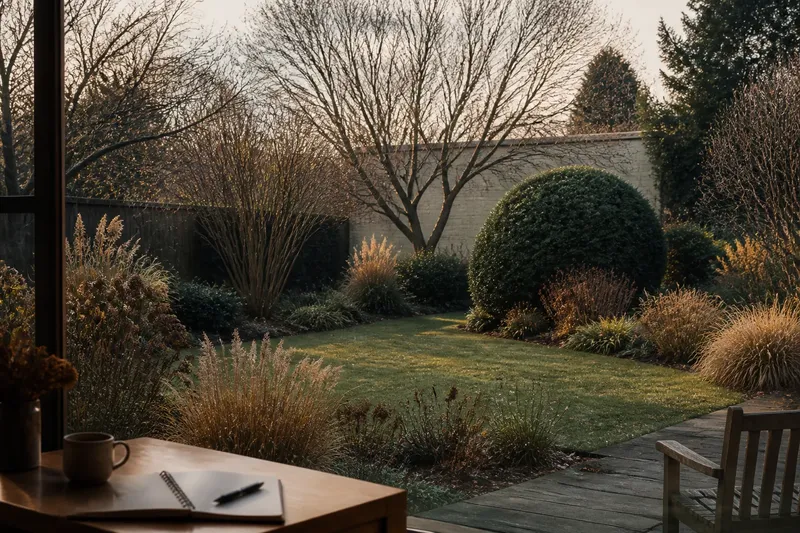
What still gives a garden shape after the leaves fall? A late-autumn garden visit lets you see the outlines that summer foliage hides: bare branches, standing stems, evergreen masses, and the spaces between them.
Choose a day when most leaves are down and the ground is comfortable to walk. Bring a notebook or phone, and look from familiar places such as a kitchen window, a favorite seat, or the back door. This is a visit for reading the garden’s seasonal forms, not for making a long list of chores.
Read the garden as a pattern of solids and open space
Start with the broad shapes visible from your most-used window. A clipped hedge may make a solid horizontal block; a bare tree may draw fine lines against the sky; an open lawn can act as a pause between them. Notice whether these shapes balance one another or crowd toward one side.
Try briefly narrowing your eyes to quiet small details. If the main forms remain distinct, their outlines are easy to read. If they merge into a single dark mass, note the particular overlap rather than deciding that the whole border needs reworking.
Check the background as carefully as the plant. Fine branches may disappear against a dark fence, while a pale wall can make their pattern easier to see. Shift your standing position to see whether the contrast changes; this is about the composition of the view, not tracing a route through the garden.
Compare the silhouettes of trees, shrubs, and seed heads
Look for more than evergreen foliage. Trees with branching crowns, shrubs with arching stems, ornamental grasses, and persistent seed heads can all contribute visible form after flowers and leaves have faded.
Notice the character of each outline: upright, spreading, rounded, fine-branched, or dense. A light, open shrub may read clearly against a hedge, while two dense shapes placed together can become one broad block. A few crossing stems can add energy; a crowded knot may obscure the shape.
Not every irregular branch is a problem to correct. Ask whether the plant’s form is legible from the places where you actually see it. If it is, a less-than-tidy close-up may not matter.
Look for rhythm and breathing room
From a fixed view, follow the sequence of forms without tracking a path. You might see a low evergreen, then a bare multi-stem tree, then an open patch of lawn. Repeated shapes can connect a long view, while a stretch of open space gives the eye a rest between more intricate outlines.
Make a quick diagram with circles for rounded shrubs, lines for trunks, and blocks for hedges or walls. It does not need to resemble the plants. The arrangement can show whether the garden’s winter structure is balanced or concentrated in one corner.
Imagine you are looking from a back door at a rounded evergreen that hides the lower half of a slender tree. You take a photo from that spot, then move to the patio and see the tree’s branching crown clearly beyond the evergreen. The answer is that the first view compresses the two shapes; you can leave the planting alone, consider a small adjustment later, or simply treat the patio view as the clearer winter composition.
Notice which materials make forms easier to see
Fences, walls, paving, and garden structures remain visible when planting recedes. Observe how their color and texture meet nearby stems: weathered timber may soften a fine outline, while a pale wall can give dark branches a crisp edge. A straight fence behind an irregular shrub also creates a contrast between ordered and loose forms.
Look at the view from a seated height if you have a bench or low wall. A border that reads as continuous while standing may separate into distinct shapes when you sit down. A quick photograph from each position can help you remember which perspective makes the garden’s forms clearest.
Make each observation lead to a useful choice
Write notes that name a viewpoint, a visible form, and what affects its outline. “From the kitchen window, the hazel’s branches disappear against the dark fence” is more useful than “the back border looks wrong.” Add a possible decision, but leave room to change your mind after seeing the garden in another season.
- Check the view from a familiar window; if the main outlines are distinct, keep that planting relationship, but if they merge, compare another viewpoint before considering a change.
- Check whether a bare tree’s branches contrast with their background; if they show clearly, leave the setting as it is, but if they disappear, note whether a different viewing position improves the contrast.
- Check whether grasses or seed heads still stand as separate forms; if they do, leave them in place for now, but if they merge into a dense patch, mark the area for a later plant-by-plant care decision.
- Check whether an evergreen reads as a rounded or spreading shape; if its outline is clear, keep its current role, but if it blocks another form from a key view, compare the view from a second familiar spot before deciding what to adjust.
- Check whether open lawn or low groundcover gives the eye a pause; if it separates complex shapes, preserve that open area, but if forms feel crowded, note where a little more visual breathing room might help.
- Check whether a wall, fence, or paving surface makes nearby stems easier to distinguish; if it provides useful contrast, record that relationship, but if it competes with the planting, consider whether the view changes from a seated position.
Say you stand at the kitchen window and record three details: a hazel’s branches blend into a dark fence, an evergreen forms a clear rounded mass, and an open lawn separates the two. You take one photo from the window and another from the patio, where the hazel stands out against a lighter wall. The resulting decision is to keep the evergreen and lawn arrangement, postpone any pruning, and first check whether the patio view is one you use often enough to serve as the main winter view. The values in this example are invented, not observations from a real garden.
What gives winter gardens structure?
Which plants hold their shape after leaves fall?
Evergreen shrubs, trees with distinctive branching, ornamental grasses, and persistent seed heads can all contribute. Their usefulness depends on whether their outlines remain distinct from the background and from neighboring plants.
How can I tell if a garden view feels crowded?
Look at the largest forms from a familiar window or seating spot, then see whether they remain separate when you narrow your eyes. If several merge into one mass, note which particular shapes overlap before considering any change.
Should I cut back every plant before winter?
No single tidy-up suits every garden. Some stems provide visible structure, while other plants have specific care needs; check reliable plant-care guidance or ask a qualified horticultural professional if you are unsure what to cut.
What should I photograph during a late-autumn visit?
Photograph a few important views from the same standing and seated places you use often. Include the silhouettes and their backgrounds so the images show how the forms relate, rather than isolating one plant.
Leave the garden with one clear question
Before going indoors, return to the view that seemed least settled. Write one specific question, such as whether a bare branch needs a lighter background or whether two dense shapes overlap only from a particular window.
A late-autumn garden visit is useful when it helps you see which forms anchor the space and which merely blend together. Save the notes and photographs, then compare them with the garden as growth returns. That contrast can help distinguish a lasting composition issue from a seasonal effect.