The Garden Path That Changes the View
A garden path changes the view by directing sightlines, hiding destinations and revealing plants in sequence, so even a small space feels more absorbing.
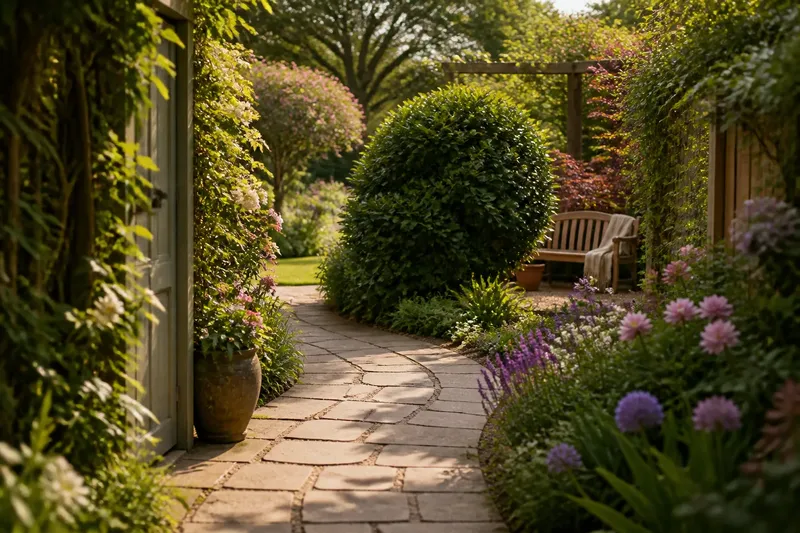
Where should a garden path lead your eye before it carries your feet? A garden path changes the view through its direction, bends, and sightlines: it can reveal a favorite tree at once, bring a familiar border into view in stages, or turn a short walk into a sequence of distinct scenes. The useful question is what a visitor can see from each point along it.
A path gives the eye a route as well as the feet
A straight path offers a clear visual line. The eye tends to travel toward its far end, so a gate, bench, or specimen plant there becomes a natural focus. This can be satisfying when the destination deserves attention, but a long, unobstructed view may make the garden feel as though it has already been seen from the entrance.
A curving path changes that experience by interrupting the view. The visitor sees a near section, follows its direction, then discovers what lies beyond the turn. The bend need not be dramatic; a gentle change in direction can put a shrub, wall, or group of plants between the entrance and a destination.
Think of the path as a line that edits the garden. It includes some elements in the view, leaves others at the edge, and controls the order in which they appear. Its effect depends not only on the outline but also on the plants and structures beside it.
Begin with the view from the entrance
Stand where a visitor is likely to enter, then look along the proposed route. Notice the first object that catches your eye, where the view seems to stop, and any area that feels exposed. A doorway, porch, or gap in a hedge can frame the first view like a picture frame, making even a modest garden feel composed.
Decide what the entrance should promise. If the path points straight at a compost area or a blank fence, the view may feel accidental. A pot, small tree, arch, or shift in the route can redirect attention without pretending practical features do not exist. Sometimes the best adjustment is simply to place the path so the fence recedes from the main sightline.
Check the view from more than one height. A seated visitor sees less over a low wall or tall planter than someone standing, while a child may notice details close to the ground. The path should make sense from the places where people pause, not only from the entrance.
Use bends to reveal the garden in sequence
A bend works when it changes what becomes visible, not merely when it makes the route longer. If a visitor can see around a curve and straight through to the destination, the turn may add little. A hedge, trellis, large pot, or generous planting can screen part of the view and create a reason to continue.
Consider what should be hidden and what should remain legible. Concealing the whole destination can feel confusing, especially if the path forks or the garden is unfamiliar. A glimpse of a bright gate, a bench back, or a flowering branch can reassure the visitor that the route is going somewhere while holding back the complete scene.
Imagine a small courtyard where the back door faces a plain storage screen. The gardener marks a curved brick path toward a wooden bench, then sets a broad evergreen shrub beside the curve to screen the bench from the doorway while leaving one end visible. From the threshold, the route hints at a place to sit; walking around the shrub brings the whole bench and a pot beside it into view. The result comes from the relationship among path, screen, and destination, not from the curve alone.
Keep the route comfortable as you create that reveal. A tight turn can be awkward when someone carries a tray or uses a walking aid, and a narrow path beside dense planting may feel pinched. The curve should suit how people move through the garden as well as how the view unfolds.
Let sightlines connect distant features
A sightline is the line of view between a person and something worth seeing. It may connect the path to a focal point such as a sculpture, water bowl, gate, or tree. It can also run across the garden, linking a near planting bed with a feature beyond it so the space feels related rather than divided into unrelated corners.
Choose a focal point that holds up from the distance and angle where it will be seen. A small object can disappear behind foliage, while a large feature may dominate the garden. Contrast can help: a pale pot against dark leaves, a simple arch beyond a soft border, or a tree trunk seen through a narrow opening.
Not every section of a path needs its own focal point. Too many competing objects can make the view restless. A quieter stretch gives the eye room to settle and makes the next deliberate reveal more noticeable.
Check how sightlines change as plants grow. A newly planted perennial may leave a view open in spring and screen it later; a young tree may eventually frame, rather than block, a distant feature. Choose plants with mature shapes and seasonal growth that support the intended view instead of relying on a permanently empty gap.
Choose path materials that support the view
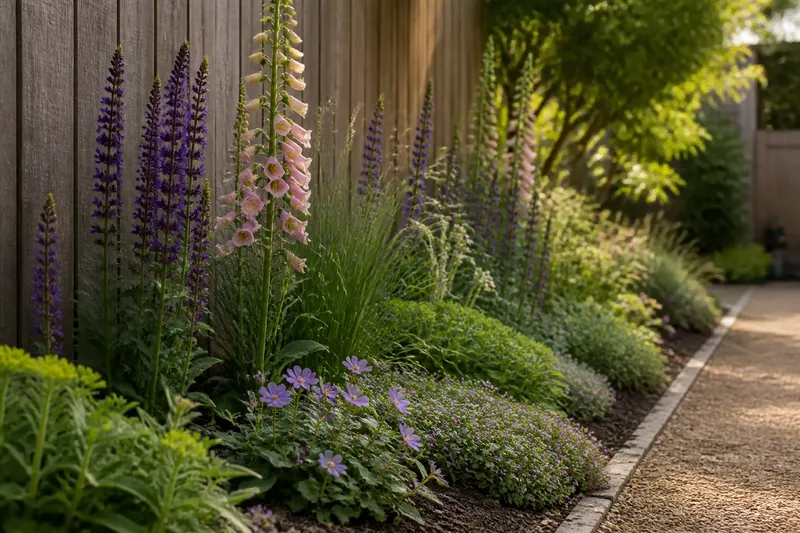
Material affects how strongly the path announces itself. Pale gravel or light paving can draw attention along the route, while brick, stepping stones, or a darker surface may sit more quietly beside dense planting. A strong border between path and bed makes the route easy to read; a softer edge can help it blend into a naturalistic garden.
Texture matters too. A change from smooth paving to gravel can signal a transition, such as moving from a terrace into a more secluded part of the garden. Repeating one material often creates a clearer visual thread, while a change in material works best when it marks a real change in place or use.
Choose a surface for the people who will use it, local conditions, and the upkeep you are willing to take on. Loose gravel can shift, and uneven stones can be difficult for some visitors. Follow product instructions and local requirements, and consult a qualified professional where installation or access needs call for it.
How can you tell whether the route is working?
Should a garden path be straight or curved?
Use a straight line when a direct route or a clear view to a destination suits the garden. Choose a bend when it changes the view, links useful places naturally, or creates a considered reveal; a curve without a visual or practical purpose can feel forced.
How do you make a small garden feel less exposed?
Interrupt a long view with a screen, trellis, planter, or planting while keeping the route easy to understand. A partial glimpse of the next space usually feels more inviting than either a completely exposed view or an entirely hidden destination.
What should a path lead to?
It can lead to a useful destination, such as a gate or sitting place, or toward a feature that rewards a closer look. It can also turn beside a border and continue out of sight, as long as its direction feels intentional rather than as if the route simply ran out.
How can you check a sightline before building?
Mark the route with a garden hose or string, then stand at the entrance, each bend, and likely stopping places. Use a tall plant pot or a piece of cardboard to suggest the height of a future screen, and notice what is revealed or obscured from each position.
Test the view before settling the route
A temporary layout can expose problems that are hard to spot on paper. Mark the path with a hose, string, or a line of spare pots, then walk it at an ordinary pace. Pause at turns and look back as well as ahead: a route may offer a lovely outward view but leave the return journey facing an uninteresting wall.
Make changes one at a time. Shift a bend, move a marker for the focal point, or add a temporary screen, then walk the route again. This makes it easier to see which adjustment improves the sequence and which merely adds complexity.
It is not worth trying to conceal every practical feature or manufacture a surprise at every turn. A view does not need a trick to be enjoyable, and excessive screening can make a small garden feel cramped. Leave ordinary service areas easy to reach, and let the main route give visitors a clear sense of where they are going.
A well-placed garden path does more than join one destination to another. It gives the eye a pace: a view to take in, a point to move toward, and a reason to look again after the next bend. Before fixing its position, walk the proposed line and ask what each turn reveals; that simple check can make the finished garden feel more connected without adding another feature.