The More Plant Varieties, the Better?
A thoughtful planting scheme needs more than variety. Learn how repeated plants, seasonal roles, and a simple editing method help a border feel coherent.
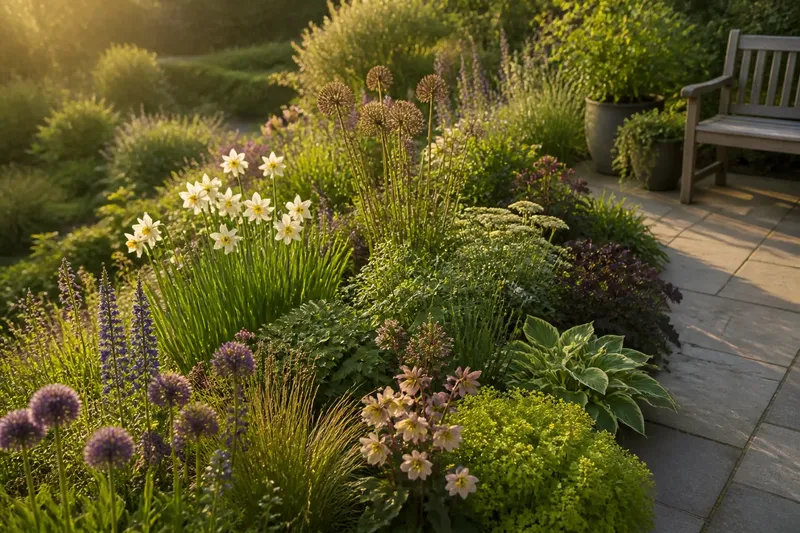
How many plant varieties does a planting scheme need before it feels rich rather than scattered? A small border beside a patio can hold many appealing plants, yet still look unsettled if every choice brings a new color and flowering moment. The better question is what each plant contributes across the seasons.
Plan for a changing view, not a single flower display
A border is not a fixed picture. Flowers open and fade, foliage changes, and some plants become more prominent while others recede. Before adding varieties, consider how the planting will read in the seasons when its showiest flowers are absent.
Make a simple calendar with the seasons across the top and plant names down the side. Note when each plant offers flowers, distinctive foliage, seedheads, or winter structure. This reveals whether the border has a succession of interest or relies on several plants peaking at once.
For example, a spring-flowering bulb can share space with a summer perennial whose foliage fills in later. A seedhead left standing can carry a late-season shape after petals have gone. These roles matter as much as the number of varieties, and they may suggest a useful addition—or show that the planting already has enough.
Give each variety a job across the seasons
Think of a plant’s contribution in terms of more than color. A variety might bring early flowers, evergreen foliage, a noticeable seedhead, scent near a path, or a useful change in texture. A plant that performs one clear role can earn its place even if it appears only briefly.
Start with the conditions, too. Check the plant label and reliable local guidance for light, soil, moisture, and hardiness needs. A variety that wants consistently moist soil may struggle in a dry, sunny strip, while a plant suited to those conditions can provide dependable interest with less fuss.
What is not worth the effort is keeping an unsuitable plant just because its label promises a striking flower. If it needs conditions the site cannot reasonably provide, choose a better-matched plant rather than building the entire border around an awkward exception.
Use a simple audit before buying another plant
Walk the border from its usual viewing points, then make a short list of what is already present. Record seasonal roles and growing conditions, not just cultivar names. The following checks turn that list into a practical decision:
- Flowering season: Observe whether a season has little color; if it does, consider a plant that flowers then, or accept the quieter interval if foliage already carries the view.
- Foliage interest: Check whether leaves offer a distinct shape or color after flowering; if not, choose a variety with useful foliage or plan to let another plant carry that period.
- Site fit: Compare the plant’s light and moisture needs with the actual bed; if they conflict, select a better-matched variety rather than trying to compensate with extra care.
- Seasonal overlap: Observe whether many plants peak together and leave a later lull; if so, add a plant with a different season of interest, or keep the existing overlap if it is the effect you want.
- Maintenance: Check whether the candidate needs regular deadheading, staking, or dividing; if that work does not suit your routine, choose a lower-maintenance alternative.
- Existing role: Look for a plant already doing the job the newcomer would do; if the role is covered, add the new variety only if it brings a distinct benefit, otherwise leave it off the list.
Make additions only when the gap is clear
Imagine you have a sunny patio border that flowers heavily in summer but offers little to notice in spring. Your list shows that the soil drains readily and the bed receives plenty of sun. You check a local nursery label and choose a spring-flowering bulb suited to those conditions, planting it among existing perennials that emerge later. The expected result is an earlier display before the summer plants take over; if the bulb’s needs do not match the site, the better decision is to look for a different spring interest rather than force the fit.
This approach also helps when a plant is attractive but redundant. If the border already has several summer flowers and little foliage interest, another summer bloomer may add less than a variety with enduring leaves or a later seedhead. The decision is about a missing role, not a rule that every season must be equally colorful.
How do you choose the right number of varieties?
How many plant varieties should a small border have?
There is no fixed number that suits every border. The useful number depends on the bed’s size, conditions, maintenance demands, and how many seasonal roles you want to include.
Should every season have flowers?
No. Foliage, seedheads, bark, and the outline of dormant plants can hold interest when flowers are scarce. Decide whether a quiet season feels restful or leaves the view feeling unfinished.
Can I add a plant that blooms only briefly?
Yes, if its brief display is valuable and the plant has a suitable place. Check what remains after flowering, and decide whether neighboring foliage or a later-blooming plant will keep that area engaging.
What should I do with plants that do not fit?
Move them to a more suitable part of the garden, offer them to another gardener, or leave them out of the border. Do not keep adding plants around an unsuitable choice simply to make it seem intentional.
Let the planting develop without constant additions
After planting, give the composition time to settle before deciding that it needs more varieties. Watch how the plants grow into their spaces, whether seasonal gaps appear, and which areas draw attention for the wrong reason. A small note in a garden journal can help distinguish a recurring gap from a temporary moment between blooms.
When you do revisit the question of plant varieties in a planting scheme, use the seasonal audit: identify the missing role, confirm that the site suits the candidate, and choose an addition that addresses that need. A border becomes more satisfying when each new plant contributes something the existing planting genuinely lacks.